In addition to the official competition with more than 80 films from 31 countries, this year’s 31st edition of CineEco – Serra da Estrela International Environmental Film Festival features an extra-competition program that reinforces the role of cinema as a space for reflection and intergenerational debate. Revisiting moments from our collective memory, re-dimensioning the idea of landscape, deconstructing the anthropocentric view of life on Earth, reflecting on the relationship with water resources, our economies ‘of affection’, cultural identity and the heritage of a region are some of the themes touched on in the special and classic film sessions, which take place on October 13, 15, 16 and 17 at the Municipal House of Culture in Seia.
Cinema in Debate: resizing the landscape
Four documentaries are part of the Cinema in Debate cycle, special sessions that will be attended by young students from various schools in Seia, who will have the opportunity to reflect on and approach different visions of the landscape – be it wilderness, water, energy or even culture.
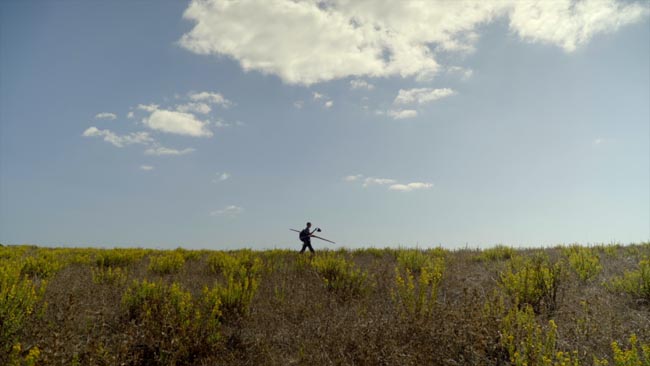
Côa Mais Selvagem (Wilder Côa), by João Cosme – An exuberant portrait of animal and plant life in the Greater Côa Valley, which challenges the anthropocentric view of life on Earth. A film that shows the natural landscapes, the local biodiversity, the wild species and the existing efforts at ecological restoration, such as the reintroduction of native species, the adaptation of these species and coexistence between local communities.
- October 13, at 11 a.m., in the auditorium of the Municipal House of Culture of Seia, debate with special guests
Até à Última Gota (Up To The Last Drop), by Ricardo Guerreiro – With the contribution of the Territorial Planning and Environment Study Group, this documentary, directed by actress Carla Chambel and accompanied by journalist Flávia Brito, questions the model of water consumption and management in Portugal. A pressing and topical reflection on intensive irrigation and sustainable alternatives. The film premiered in February 2025 at the Calouste Gulbenkian Foundation.
- October 15, at 11 a.m., in the auditorium of the Municipal House of Culture of Seia, debate with director and actress Carla Chambel
Filhos do Vosso Amor (Children Of Your Love), by Rui Pedro Lamy – A look at traditions in the Melgaço region, specifically in Gave, and the communities’ deep connection to the land and their ancestral traditions and practices. A narrative about the effort to perpetuate stories, rituals and sharing such as transhumance, the brandeiro and the inverneiro. Last August, the film won the awards for Best Short or Medium Length Film and Best Portuguese Documentary at the MDOC – Melgaço International Documentary Festival.
- October 16, 11 a.m., in the auditorium of the Casa Municipal de Cultura de Seia, with the presence of the director
Unrenewable Lives. Naturaleza o Miseria (Unrenewable Lives. Nature or Misery) by Francisco J. Vaquero Robustillo – An alert documentary from Spain about the negative impact of the uncontrolled proliferation of renewable energy equipment on local ecosystems and communities. This film invites reflection on the ecological/energy transition and does not neglect to take a critical look at a concept that has been touched on – “energy colonialism” – about the way renewable energies are being implemented in the territories, causing damage to ecosystems, the primary sector and local communities. Vaquero Robustillo, director of “Ganado o Desierto”, won an award at CineEco 2022.
- October 17, 11 a.m., in the auditorium of the Casa Municipal de Cultura de Seia, with the presence of the director
Classic cinema: 50 years of Agrarian Reform
CineEco will also celebrate 50 years of Agrarian Reform in Portugal with a double screening of classic cinema that revisits key moments in Portugal’s collective memory. On October 17, in the afternoon, the auditorium of Seia’s Casa Municipal da Cultura will host a double dose of two documentaries shot in Alentejo and Ribatejo that reflect the popular dynamics and the creative process of cinema in the post-revolutionary period.
– Land of Bread, Land of Struggle (1977), by José Nascimento (screening at 2:30 p.m.) – A historical document about the social upheavals of the Alentejo in the post-25 April period, now screened in a restored digital copy by Cinemateca Portuguesa. This feature film focuses incisively on the political movement for Agrarian Reform, starting from the idea of the slogan with which this movement identified itself, and which came to refer to it historically: “the land for those who work”.
– Linha Vermelha (2011), by José Filipe Costa (screening at 4:30 p.m.) – A contemporary look at Thomas Harlan’s Torre Bela (1975), which recorded the occupation of an estate in the Ribatejo and the various stages in the formation of a new farming community in Portugal. “How did Harlan intervene in the events that seem to unfold naturally in front of the camera? What impact did the film have on the lives of the occupiers and on the memory of that period?”
The 31st edition of CineEco takes place from October 10 to 18 in Seia. This year, the festival presents an official selection of 81 international and Portuguese-language feature, medium-length and short films from 31 countries, offering a rich and diverse cinematic mosaic of contemporary environmental challenges.
In the International Selection of Feature Films, we should highlight a group of ten works that are absolute premieres in Portugal, where the human factor is always decisive in the investigation, observation or experience of a dimension of the climate crisis.