

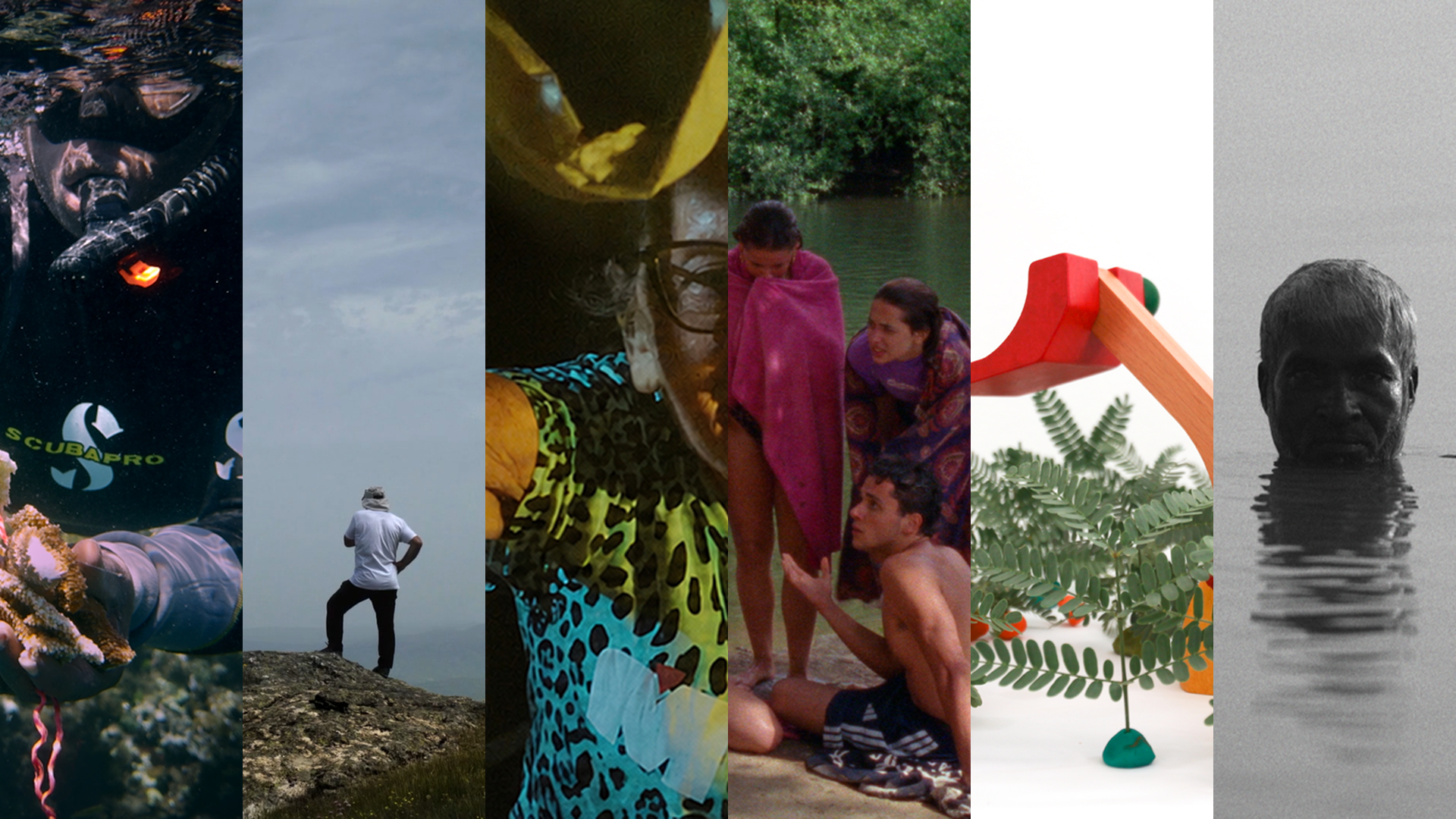
From 9 to 17 October, Seia once again becomes the centre of international environmental cinema, with nine days dedicated to screening national and international films that give visibility to, and encourage reflection on, today’s major environmental issues. 87 films from 34 countries have been selected. In the International Feature Film Selection alone, 10 documentaries will have their absolute premiere in Portugal, portraying pertinent environmental narratives on economic models, the new challenges of environmental activism, climate apartheid, environmental migration, and species, habitats and resource exploitation across five continents.
This year, the Serra da Estrela International Environmental Film Festival, in Seia, once again saw significant participation from films entered for the Official Selection – 410 works were submitted (fiction and documentary films produced for cinema and/or television, national and international, as well as visual art works made in digital, video or film media, on environmental themes). Of the 106 films in CineEco’s 32nd edition, 86 works from 34 countries make up the festival’s six leading competitions. Overall (films on general release plus those in competition), CineEco brings together 144 directors this year.
In the International Feature Film Selection, ten works stand out for their absolute premiere in Portugal, including films screened or awarded at leading film festivals such as Cannes, the International Film Festival Rotterdam, Visions du Réel (France), Sundance (USA), CPH:DOX (Denmark) and the Thessaloniki Film Festival (Greece).
Let’s start with two fiction works by young female directors: the classic melodrama ON THE SEA (United Kingdom), by Helen Walsh, which explores the tension between tradition and nature in a Welsh fishing community, and the radical comedy L’ESPÈCE EXPLOSIVE (France), by Sarah Arnold, about the conflict between farmers, hunters and… wild boar, a film that received the prestigious Europa Label award at Cannes’ Directors’ Fortnight.
The threats posed by modernity and climate change to ancestral pastoral communities are portrayed in LET OUR MOUNTAINS LIVE (Norway), by Håvard Bustnes, in which Sami reindeer herders fight against Europe’s largest wind farm, and IRON WINTER (Australia, Mongolia), by Kasimir Burgess, which observes two friends’ unwavering commitment to protecting 2,000 horses through Mongolia’s harsh desert winter.
The contemporary traces of colonial power are clearly visible in this official selection, as in the documentary KIKUYU LAND (Kenya), by Andrew H. Brown and Bea Wangondu, filmed on the tea plantations of the Kenyan highlands, and MATERIA PRIMA (Germany), by Jens Schanze, about the exploitation of Bolivia’s vast lithium deposits – both narratives resonating, in different ways, with Portuguese history.
Two recurring major themes in environmental filmmaking are addressed with great topicality in two further films in this selection: climate apartheid, in BLACK WATER (Spain), by Natxo Leuza, which documents the current refugee crisis in Bangladesh amid rising sea levels, and the tense divisions over agricultural production models, observed comically in DEREK VS DEREK (United Kingdom), by James Dawson.
The future is also explored and questioned in this programme. The new political, economic, ethical, technological and scientific challenges facing environmental activism are reflected in two films that challenge the status quo – the speculative PLAN C FOR CIVILIZATION (United States), by Ben Kalina, and the provocative THE SYSTEM (Netherlands, Belgium), by Joris Postema, featuring music by Lee Ranaldo of Sonic Youth.
Worth noting is that, out of competition, the animated feature ANIMAL FARM (United Kingdom), by Andy Serkis, will be screened – a musical satire based on George Orwell’s Animal Farm.
In the Official Selection of Portuguese-Language Feature Films, the national premiere of the speculative fiction work YELLOW CAKE (Brazil), by Tiago Melo, stands out, produced by Kléber Mendonça Filho and Emilie Lescaux (Oscar nominees for The Secret Agent). This competition also includes the animated film NIMUENDAJÚ (Brazil), by Tania Anaya, and the documentaries RUA DO PESCADOR Nº 6 (Brazil), by Bárbara Paz, ÁGUA MÃE (Portugal), by Hiroatsu Susuki and Rossana Torres, O AVESSO DO MUNDO (Portugal), by Rita Palma, and BAÍA DOS TIGRES (Angola, Portugal), by Carlos Conceição.
It should also be noted that CineEco 2026’s Official Selection includes the International Short and Medium-Length Film Competition. This competitive section brings together 31 new films on a range of themes, including resource exploitation, sustainability, natural territories under threat, the actions of native peoples, resource management and urban planning. Highlights include QUIETUDE, by Portuguese director Gonçalo Almeida, and FELICIDAD, by Spanish director Francesco Mastroleo, two short films produced as part of a film residency led in 2024 in La Palma by German filmmaker Werner Herzog. The broad thematic scope of climate change and global overheating is reflected in Miguel Dorado’s science-fiction narrative 1,5 Y MÁS, and in the poetic vision inherent to the short film YOU TOLD US TO TALK ABOUT THE WEATHER, by British director Harry Tomlin. Aquatic ecosystem issues are echoed in THE HERRING QUEEN and KOMARNICA: THE WILD THAT REMAINS. Biodiversity is addressed in LOVE BIRDS, WE ARE ANIMALS and DAWN CHORUS (a film about the beauty of birdsong at dawn, following musician and philosopher David Rothenberg as he captures forest sounds to make music together with birds).
The theme of landscape and territory, a recurring one in CineEco editions, returns this year in films such as IBRIDO URBANO, FINDING THE LANDSCAPE and LAST TROPICS. Other perennial festival themes are indigenous cultures and local activism, present in SAY IT SLOWLY, about traditional languages and cultures, REMIGIA’S LESSONS, which addresses local resilience through the transmission of knowledge, and LOST SONGS OF SUNDARI, an approach to the preservation of memory as intangible heritage of a given culture. There are also films focused on reforestation and the therapeutic dynamics of flora, such as the documentary REPLANTING A GARDEN and the animated film PETRA Y EL SOL. Migration linked to environmental or social pressures, and high-risk routes, are covered in films such as RISKY ROUTES, which follows amphibian migration in Switzerland, and the Mexican fiction short EL GÜERO, in which an employee of a US company arrives in a coastal Mexican town to oversee construction of the region’s first hotel.
The Official Selection of Portuguese-Language Short and Medium-Length Films comprises 14 works, including OS BRAVOS, by Catarina Mourão, ALGUMAS COISAS QUE ACONTECEM AO LADO DE UM RIO, by Daniel Soares, and ONDE NASCEM OS PIRILAMPOS, by Clara Vieira – films with a notable international track record, including at the Rotterdam and Cannes festivals.
Equally important is the Regional Panorama Competition, dedicated to films with narratives centred on the territory and the Serra da Estrela, which also includes MAÇOS E MARTELOS, by Tiago Cerveira, O AVESSO DO MUNDO, by Rita Palma, O PRÓXIMO PRINCÍPIO, by Pedro Nogueira, and O ANJO DA GUARDA, by Eduardo Pires. This year, a special out-of-competition screening will present the feature film LIÇÕES DE FOGO (Finland), by John Webster, a documentary about wildfires in Portugal filmed in Castelo Branco and in the village of Sabugueiro, in Seia.
It should also be noted that, for the second time, CineEco includes the competitive category of Fiction, Non-Fiction and Animation Short Films, in which 25 films from 15 countries are competing.
See the full list of the CineEco 2026 Official Selection here. For more detailed information on each film, visit here.
Additional Information:
CineEco – the Serra da Estrela International Environmental Film Festival – is one of the oldest environmental film festivals in the world, held in Seia every October, without interruption, since 1995, on the initiative of the Municipality of Seia.
CineEco offers the general public a carefully curated programme, showcasing lesser-known and alternative cinematographies compared to the mainstream market.
The festival’s format is built around a set of activities held over eight days, with free admission. Besides its competitive strand, CineEco also includes an educational component and various parallel activities, such as conferences, concerts, workshops, exhibitions and a film market, contributing to active citizenship in the fields of sustainable development, territorial valorisation, education, and the enrichment of environmental and cinematic knowledge
Beyond the festival dates, and throughout the year, an extensive network of extensions takes place across the country, giving audiences the opportunity to view films from the official programme — one of the festival’s distinguishing features.
CineEco is organised by the Municipality of Seia and holds the High Patronage of the President of the Republic and of the United Nations Environment Programme. It also receives financial support from DGArtes.
The Festival’s programming is the responsibility of Cláudia Marques Santos, Daniel Oliveira and Tiago Alves.
The Festival’s programming is the responsibility of Cláudia Marques Santos, Daniel Oliveira and Tiago Alves.