


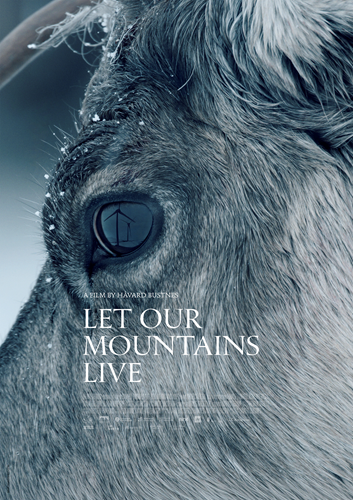
Sámi reindeer herders Sissel Stormo Holtan, Elise Årbogen and Terje Haugen have spent two decades battling Europe’s largest wind power project, which sprawls across their vital grazing lands in the mountains of Fosen in Norway. Even before the case can fully proceed through the legal system, the Norwegian state grants preliminary access to the wind power companies, allowing them to construct 151 enormous turbines in the mountains. A few years later, the wind turns.
The Norwegian Supreme Court rules that the wind farm violates Sámi human rights—offering hope that the reindeer herders might finally reclaim the mountains their culture depends on. For the first time, Sissel, Elise and Terje are confident that the turbines will be removed, and they will get their mountain back. But their victory quickly loses its shine. The Norwegian government refuses to act, siding with powerful wind companies—backed by giants like Credit Suisse and Stadtwerke München—and insists that “mitigating measures” will allow the turbines and reindeer herding to coexist. In response, Sámi youths begin demonstrating, staging protests that capture international attention and spark widespread condemnation. The breach of human rights becomes a growing embarrassment for the Norwegian government. Under mounting pressure, the Prime Minister is forced—for the first time—to acknowledge that Sámi human rights have indeed been violated. But instead of dismantling the wind turbines, the government offers a €14 million settlement, urging the herders to relocate their grazing elsewhere. For Sissel, Elise and Terje, this marks a painful new dilemma. Though the money could secure their financial future, they see it as little more than a modern form of forced relocation. As Terje puts it, “Reindeer can’t eat money.”
Filmmaker details: Håvard Bustnes
Håvard Bustnes (born 1973) is a multi-award winning director and producer. He is a member of the European Film Academy, and the co-founder of UpNorth Film. Bustnes holds a degree in Directing for Television from the College of Film and TV at Lillehammer and NTNU in Trondheim. His new film Let Our Mountains Live premiered at CPH:DOX in March. His two previous films The Gardener, the Buddhist and the Spy and Phantoms of the Sierra Madre premiered at the same festival in 2025 and 2024 respectively. In 2023, his short documentary Behind the Mask premiered at DOC NYC. Earlier films include Name of the Game (original title: Trond Giske – Makta rår), which premiered at IDFA in November 2021 and won the Golden Screen award (Norwegian Emmy), and Golden Dawn Girls whichpremiered in the IDFA Competition for Feature-Length Documentary in November 2017, was selected for more than 50 film festivals, and won the Human International Documentary Film Festival, One World Brussels, and Nordic/Docs. Other earlier films are Two Raging Grannies, Health Factory, and Big John. The latter won the Norwegian “Oscar”, the Amanda Award, for Best Theatrical Documentary. Bustnes’ films have been selected for more than 100 festivals worldwide and have had theatrical releases in several countries around the world.