


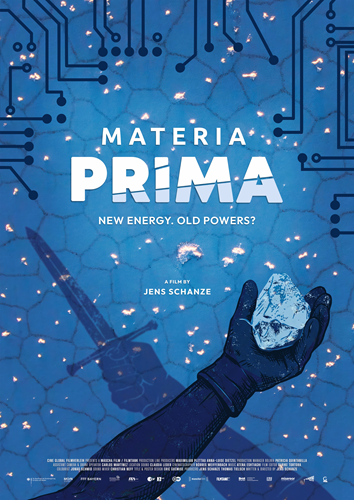
The world’s largest lithium deposit is located in the Bolivian Andes. The Europeans want the raw material to save their automotive industry, the Bolivians want to use it to overcome poverty, and companies from all over the world are exploring their options. Lithium has triggered a new gold rush, for it is essential for the energy transition. Without this metal, no electricity storage facility, no data centre, no electric car, no smartphone would work.
On the European side, entrepreneurs and EU diplomats are leading the negotiations with the Bolivian government. In rural areas, civil society groups are mobilising, organised mainly by women. With its multi-perspective narrative and mostly observational style, the film offers a rare insight into the European’s strategy to secure the sought after material and carves out the different interests and view points of a farmer, a llama herder, a mine guard, a lawyer, a miner, and a political activist towards extractivism and industrialisation in Bolivia. The history of colonial oppression, which is given voice through the 16th-century chronicle of the indigenous eyewitness Guamán Poma de Ayala, puts the present into perspective and provokes the question: Are we ready for decolonisation?
Filmmaker details: Jens Schanze

Jens Schanze grew up in the Rhineland, West Germany. He initially studied forestry and lived in Bolivia for a year before studying documentary filmmaking at the Munich University of Television and Film. In 2002, he launched the production company Mascha Film, together with Judith Malek-Mahdavi. In 2014, he was appointed professor of film and video design at Deggendorf Institute of Technology. His thought-provoking films are shown at renowned international festivals and have received numerous awards. The responsibility of the individual for society’s development is a central theme in his work. He is a member of the German and the European Film Academy.