


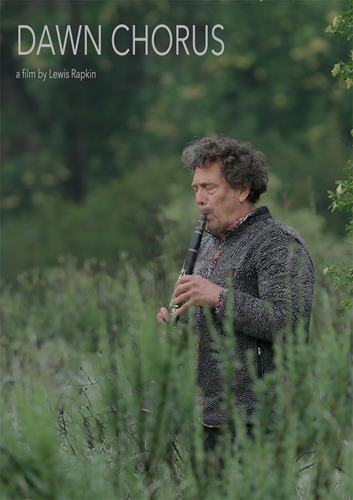
Dawn Chorus is a meditative and thought-provoking short documentary following interspecies musician and philosopher David Rothenberg as he ventures into the natural world with an unusual mission: to make music with birds. Blending art and science, the film explores the relationships between observer and participant, musician and animal, human and nature. Set in the liminal hours of early morning, the film captures Rothenberg’s immersive practice of joining the daily birdsong that erupts at sunrise. With clarinet in hand, he doesn’t seek to mimic or analyze the birds, but to communicate and to become part of nature’s symphony. Using still, “locked-off” camera shots, the film showcases ecosystems often overlooked. Bathed in early light, plants, trees, and birds are framed as characters in their own right. This intentional visual style reinforces the film’s central message: attention is an act of care. To truly appreciate nature, we must learn to be still and to listen. More than a study of birds or a portrait of an eccentric musician, Dawn Chorus is a meditation on the interconnectedness of life. Rothenberg draws from ornithology, bioacoustics, and ethnomusicology, approaching the dawn chorus not as random noise, but as the artistic expression of the natural world. His collaborations with birds become metaphors for a deeper ecological truth: humanity is not separate from nature, but part of it. The film positions Rothenberg’s work as a call to action. By showing what is possible when we listen to the world, the film challenges viewers to reconsider their own relationship with nature. It asks: What if we saw ourselves not as masters of the earth, but as one voice among many in a planetary chorus? What if, instead of seeing the natural world as a resource to be used, we viewed it as a conversation to be joined? In a time of growing ecological alienation and environmental urgency, Dawn Chorus doesn’t propose technological fixes or policy solutions, but something more fundamental: a shift in mindset. It asks us to slow down, to listen and to recognize that we, too, are part of nature’s song.
Filmmaker details: Lewis Rapkin
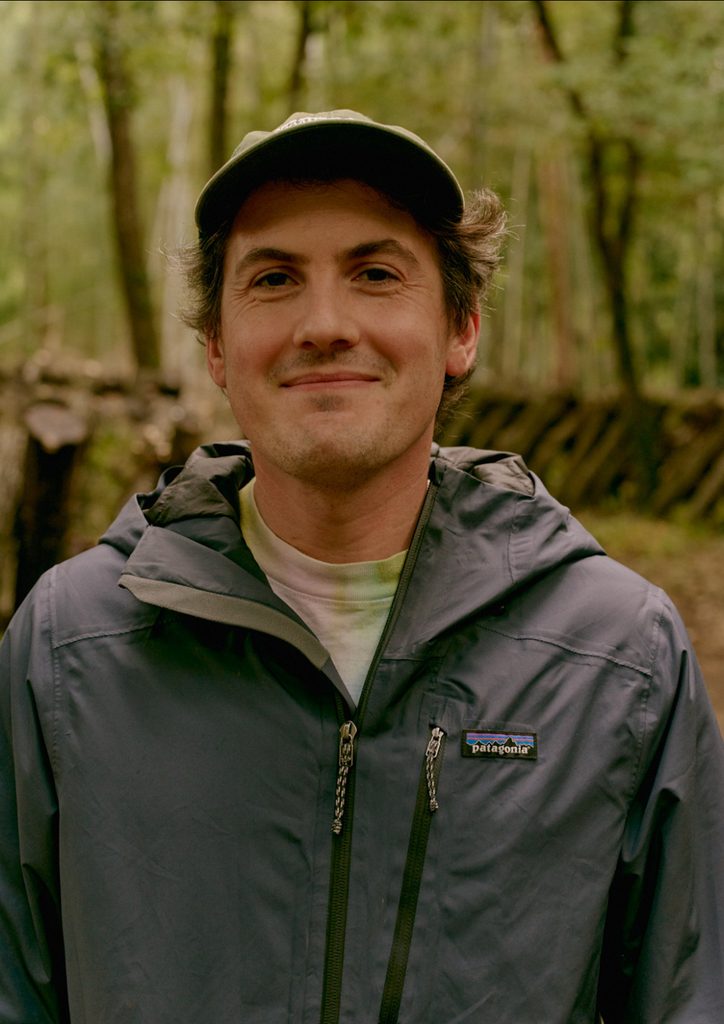
Lewis is an award-winning director, editor and composer. He recently produced and edited the upcoming hybrid feature documentary Four Down, produced by Mark Wahlberg and Snoop Dogg. As a director, his film VIVIR premiered at the Cannes Film Festival and won the US Nespresso Talents Grand Prize at the Tribeca Film Festival in 2019. His debut feature documentary Live From Tokyo was distributed globally, screened on 6 continents and was dubbed by one reporter as a “Koyaanisqatsi for the Internet generation.” He was the supervising editor for the Emmy-nominated feature Omoiyari: A Song Film by Kishi Bashi produced by Sheila Nevins for Paramount+ He has edited films and series for HBO Max, Hulu, Vox, Vice, Showtime, Paramount+, PBS, CNN, MSNBC, BBC, MTV, Planet Green, The New York Times, Fusion and A&E. Lewis was part of the initial team to launch VICE News in 2013, editing innovative and award-winning international current affairs documentaries. He also edited the VICELAND series States of Undress and the Emmy-nominated HBO series Level Playing Field. He edited Steven Cantor’s feature documentary What Will Become Of Us which premiered at the Tribeca Film Festival and was scored by Aaron and Bryce Dessner of The National. He also edited the feature documentary Twyla Moves about choreographer Twyla Tharp which premiered at SXSW. He was an associate editor on the Peabody and Emmy award-winning documentary Marina Abramovic: The Artist is Present, which premiered at the Sundance Film Festival in 2012, as well as the Emmy-nominated documentary Kehinde Wiley: An Economy of Grace, which won the Special Jury Prize at SXSW in 2014. In addition to directing and editing premium documentaries, he is also an accomplished composer, who often composes music for the projects that he is involved in. Recent examples of this include the feature Twyla Moves and the HBO series Level Playing Field. As a composer, Lewis collaborated with Google and Dolby Laboratories on his documentary Automatic On The Road to create one of the first doc music scores to ever be conceived of and mixed in Dolby Atmos surround. His music has appeared in programs for HBO, Showtime, MSNBC, VICELAND, MTV, PBS, The Shed and The Guggenheim Museum