


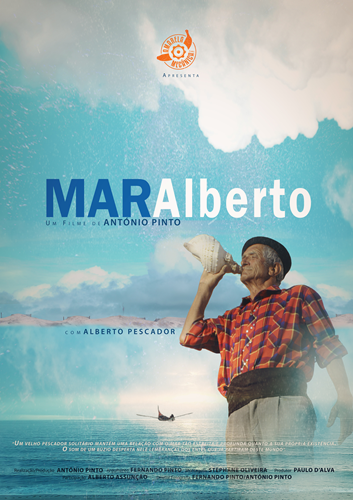
Alberto Pescador was born amidst the sound of the waves and the strenuous effort of hauling fishing nets across the sand. Throughout his life, the sea has been his livelihood, his school, and his home. Today, however, he witnesses the slow disappearance of arte xávega, a centuries-old fishing tradition that has shaped the identity of Portuguese coastal communities for generations.
Faced with the shortage of men to form the fishing crews, the lack of institutional support, and the inevitable passage of time, Alberto sees not only a fishing practice fading away, but also a human and cultural heritage built by successive generations. As the nets grow lighter in hands and heavier in memory, he remains one of the last witnesses to a way of life on the verge of extinction. Blowing into an ancient conch shell, Alberto summons memories that seem to rise from the depths of the sea. The voices of departed companions, stories of hard work and camaraderie, fishing rituals, and moments that marked a lifetime return in a journey that moves between present reality and remembrance. Each memory reveals not only the path of one man, but also the collective history of a community that found its reason for being in the sea. Between the harshness of contemporary reality and the timeless beauty of the maritime landscape, MARALBERTO is an intimate portrait of identity, resilience, and legacy. A poetic testimony to what remains when everything else seems to disappear, and a reflection on the urgency of preserving memory before silence finally takes the place of the voices that echoed along the shore for centuries.
Filmmaker details: António Pinto
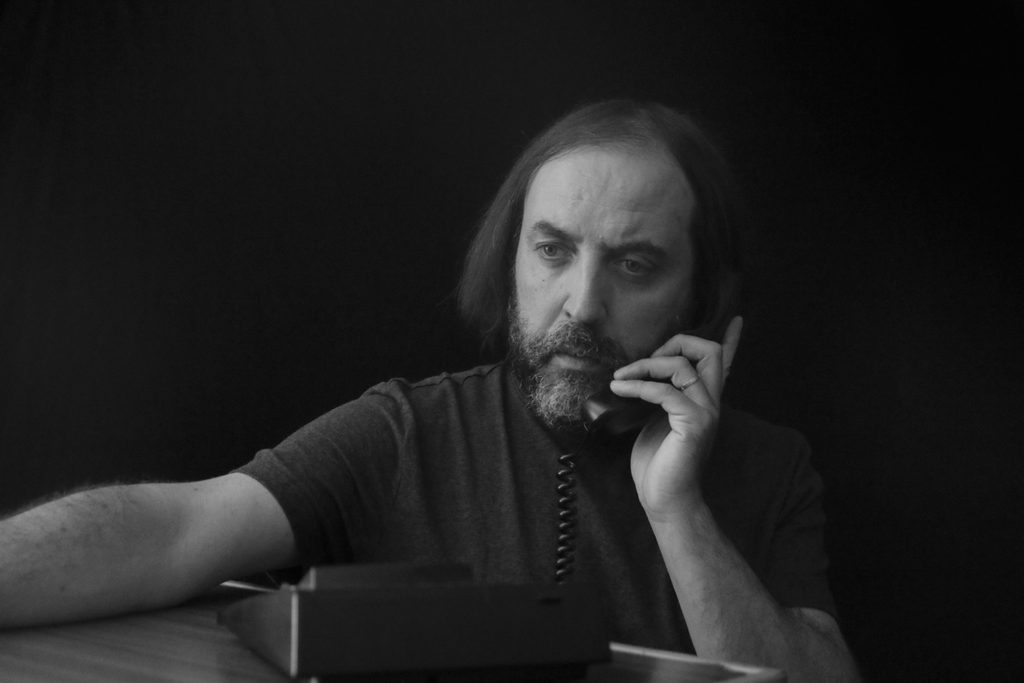
António Pinto is a father, director, screenwriter and lecturer, and holds a degree in Sound and Image, specialising in Television and Image, from the School of Arts at the Catholic University of Oporto (1997–2002). He has directed short films across documentary, fiction and animation fields, several of which were screened at national and international festivals during his university years, including the fiction shorts “Cata-Vento” and “Emprestas-me os Teus Olhos”. Between 2003 and 2017, he worked as a director of documentaries and television programmes, while also overseeing graphic design content. Among his notable works is the literary programme “Ler Mais Ler Melhor” for RTP2. He continues to collaborate regularly with several film and television producers and directors. His credits also include serving as assistant cinematographer on Pedro Serrazina’s “Canção Distante”, as a cinematographer on Rodrigo Areias’ “Nicolinas”, as well as on “És a nossa Fé”, directed by Edgar Pêra, and “Nos Passos de Santo António”, directed by Gonçalo Cadilhe for RTP1. He also created the opening titles and motion graphics for Gonçalo Cadilhe’s documentary “Nas Ilhas das Especiarias” for RTP2 and contributed to Rodrigo Areias’ feature film “A Pedra sonha dar flor”. A notable milestone in his documentary work is “Toponímia – As Memórias do Porto” (2021), which was showcased at the opening of Fantasporto 2021. In animation, he co-directed the short film “Fim de Linha” produced by Bando à Parte. His films have been screened at numerous national and international festivals. He currently works as a director, screenwriter and lecturer in Audiovisual Production Techniques.